
What Is a Residual Current Device (RCD) and What Does It Do?
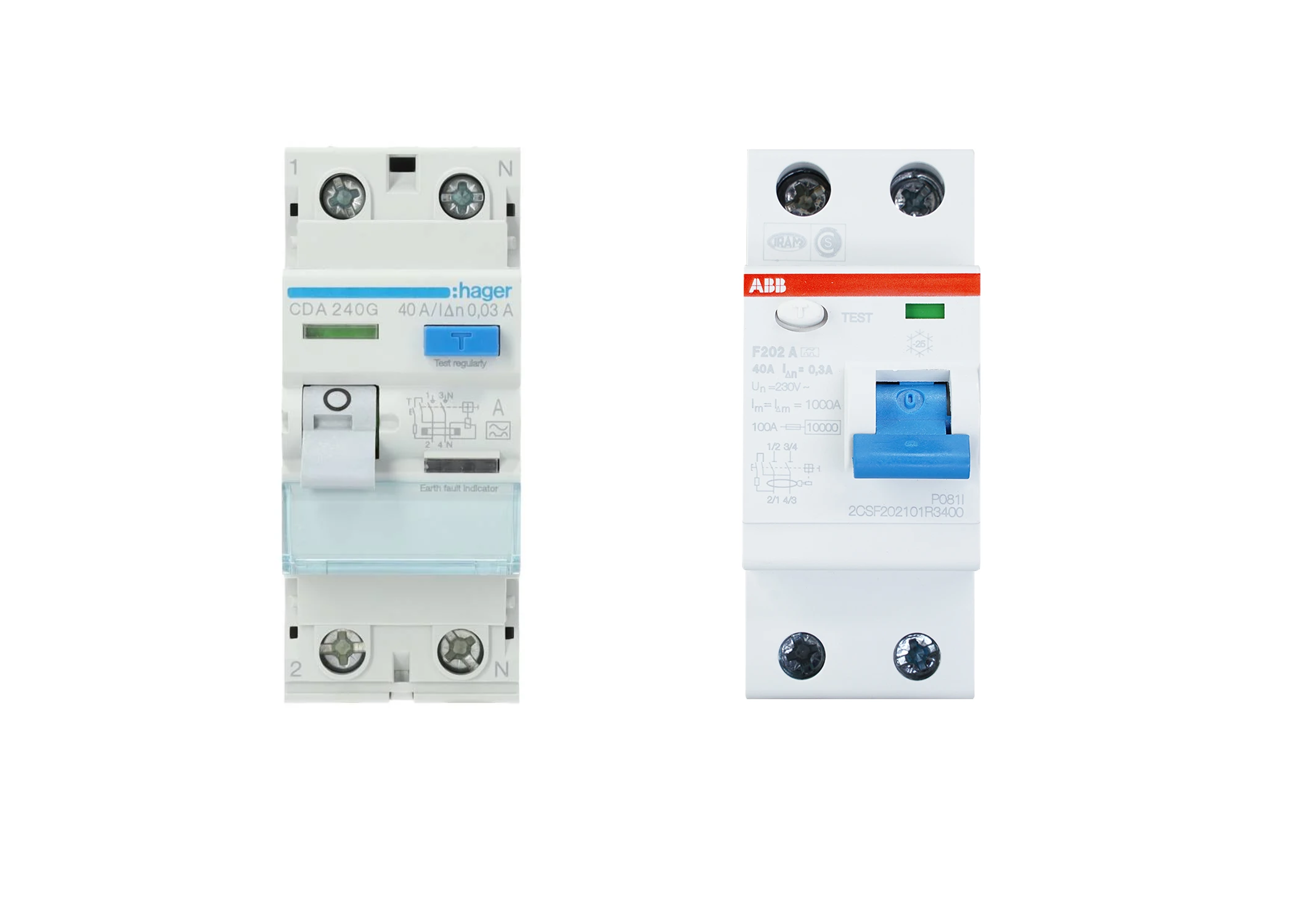
What Is a Residual Current Device (RCD) and What Does It Do?
A residual current device (RCD) is an important safety component in an electrical installation. It helps protect people against electric shocks and reduces the risk of electrical fires caused by certain earth leakage currents.
But how does an RCD actually work, and why is it so important?
How Does an RCD Work?
An RCD continuously monitors the electrical current flowing through the live wire and compares it with the current returning through the neutral wire.
If there is a difference between these two currents, this may indicate an electrical leakage current. This can happen, for example, when electricity escapes through damaged wiring, a faulty electrical appliance or a person to earth.
As soon as the RCD detects a leakage current exceeding its rated sensitivity, it automatically disconnects the electrical supply.
A commonly used RCD for additional protection against electric shock has a sensitivity of 30 milliamps (30 mA).
This significantly reduces the risk of serious electric shock.
What Does an RCD Protect Against?
An RCD provides protection against:
- Dangerous leakage currents in an electrical installation.
- Electric shocks caused by indirect contact with faulty electrical equipment.
- The risk of fire caused by certain electrical leakage currents.
Please note: an RCD does not provide protection against overloads or short circuits. These require separate circuit breakers or fuses.
What Is the Difference Between an RCD and an RCBO?
An RCD and an RCBO may look similar, but they perform different functions.
RCD (Residual Current Device)
An RCD monitors leakage currents and disconnects the electrical supply when it detects an imbalance between the live and neutral currents.
Additional protection against overloads and short circuits must be provided by a separate circuit breaker.
RCBO (Residual Current Circuit Breaker with Overcurrent Protection)
An RCBO combines two protective functions in one device. It provides protection against earth leakage currents, overloads and short circuits.
The main difference is that an RCBO combines multiple protective functions, whereas a standard RCD only provides residual current protection.
Why Is a Properly Working RCD Important?
A properly functioning RCD is essential for the safety of your electrical installation.
It is therefore important to test its operation regularly using the test button on the device.
When you press the test button, the RCD should trip immediately. If it does not, have it inspected by a qualified electrician.
Unsure whether your RCD is working correctly or whether your electrical installation is properly protected?
Have your installation inspected by a qualified electrician to ensure it is safe and meets the applicable electrical safety requirements.
Hulp nodig met je installatie?
Neem contact op voor advies, een offerte of een afspraak.